0:000.42 seconds short
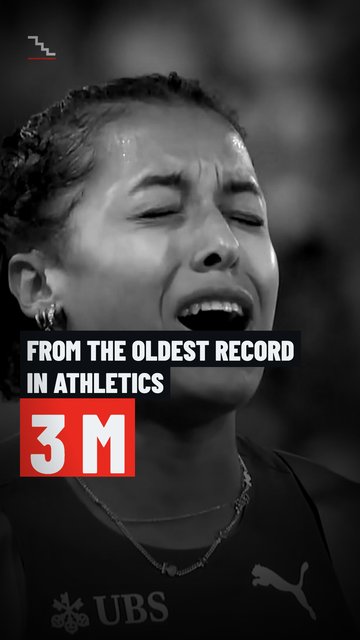
COMMENTATOR: Is she going to break the world record? COMMENTATOR: Audrey Werro. She doesn't.
1:53.70. The closest anyone has come in 43 years. And it still wasn't enough.
The record she's chasing was set in 1983, by a woman who was never supposed to run that race.
0:17Munich, 1983
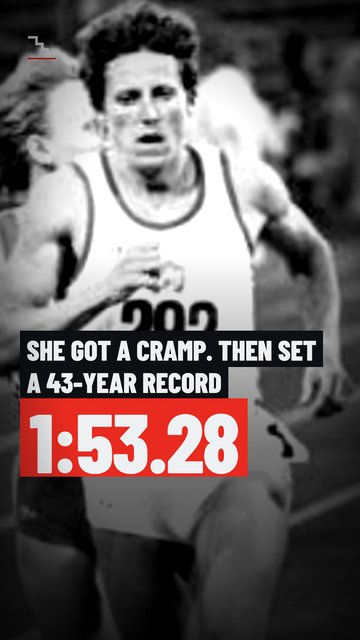
Munich, the 26th of July, 1983. Jarmila Kratochvílová has come to run the 200 metres. A quick speed test less than two weeks before the first World Championships.
Then she feels a cramp, so she asks for a different race. A longer one, where speed matters less. The 800 metres.
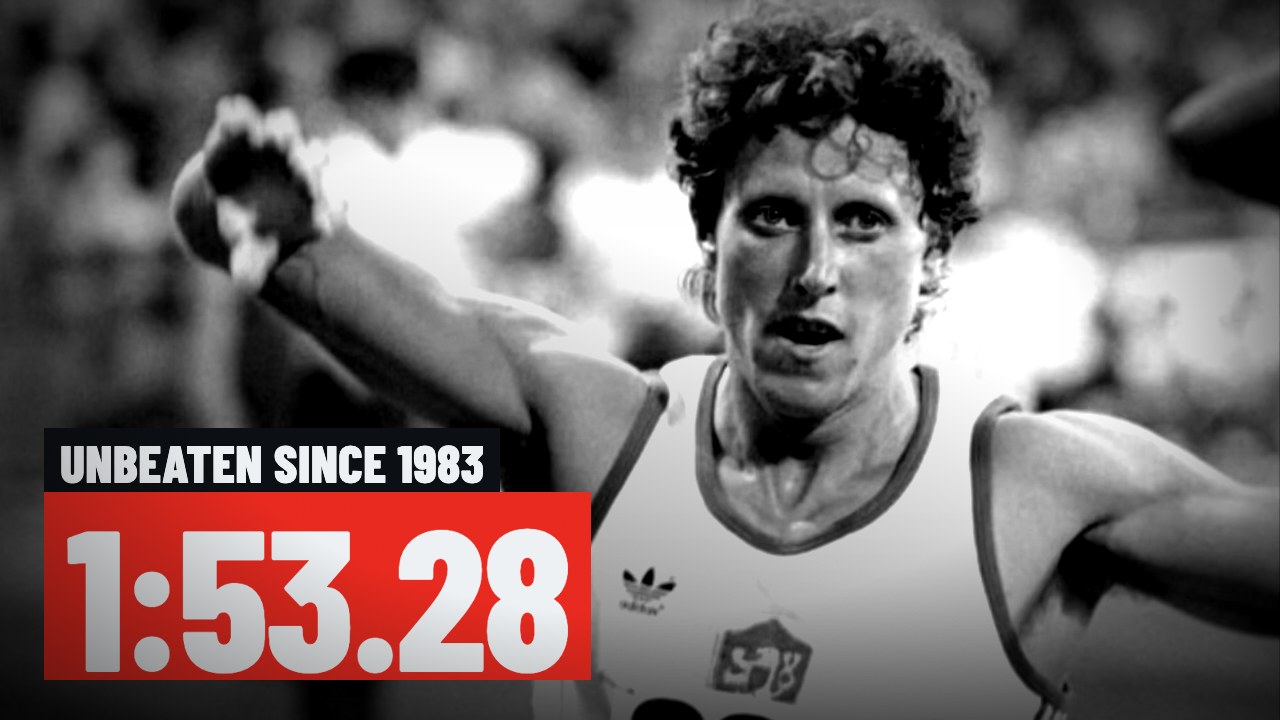
Two laps. She runs it in 1:53.28. 43 years later, that is still the world record.
No individual record in athletics has lasted longer. And this summer, for the first time, someone came within half a second. So is it finally about to fall?
To answer that, we have to see just how fast it really is.
1:03Sixty years of records
This is every women's world record over 800 metres. Paris, 1922, two minutes 30. For 60 years, the line falls fast.
In 1971, it breaks two minutes. At the Moscow Olympics in 1980, Nadezhda Olizarenko runs 1:53.43. Three years later, Kratochvílová takes 15 hundredths of a second off it.
And then the line stops. For 43 years, it doesn't move.
1:33The woman she couldn't beat
She grew up in Golčův Jeníkov, a small town east of Prague. It started in the fields of her uncle's farm. At 16, she met her coach, Miroslav Kváč.
He stayed with her for 20 years. The training was brutal, even by the standards of the time. Heavy weights, sessions before dawn.
When the track was buried under snow, she is said to have sprinted in spikes on a frozen pond. She was not a prodigy. She ran her first 400 metres under 50 seconds at the Moscow Olympics, aged 29.
She won silver. The woman in front of her was Marita Koch of East Germany, the best 400 metre runner in the world. In Rome in 1981, Kratochvílová beat her.
A year later, at the European Championships in Athens, Koch passed her with 150 metres to go. Koch took the title and the world record. Over 400 metres, Koch kept winning.
So at the end of 1982, Kratochvílová tried something longer. In Prague, she ran her first serious 800 metres.
2:37Munich
Which brings us back to Munich. The next summer, with a sore leg, she runs the race she didn't plan to run. There is a pacemaker, and the field is not strong.
She goes through the first lap in about 56.8, then she runs the second lap faster than the first. Over 800 metres, that is very unusual. The second lap is where the race hurts, 1:53.28.
A world record by 15 hundredths of a second, she is 32 years old.
3:07Helsinki: 35 minutes
12 days later, the first World Championships in Helsinki. She enters both the 400 and the 800. Day one, two heats.
Day two, a quarter-final and a semi-final. Day three is the one people still talk about. First, the 400 metres semi-final.
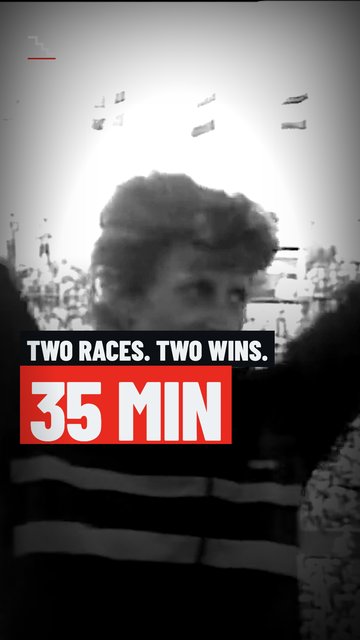
She wins it. 35 minutes later, she is back on the start line for the 800 metres final. She wins that too, by almost a second and a half.
Day four, the 400 final. Koch isn't in it. She has chosen the shorter sprints, so her world record falls without her on the track.
Kratochvílová runs 47.99. The first woman ever under 48 seconds. Seven races in four days.
Two gold medals. Two world records in 15 days.
3:59The question
There is a question that follows this record everywhere, so let's deal with it honestly. The early 1980s were the worst era for doping in the sport's history. In East Germany, the state programme is documented in detail, from its own files.
For Czechoslovakia, the picture is less clear. In 2006, the newspaper Mladá fronta DNES reported finding evidence of a state doping programme. No link to Kratochvílová was shown.
She has never been sanctioned. She has always denied it. She and her coach put her strength down to farm work as a child, heavy weight training and vitamin B12.
Many anti-doping experts don't find that convincing. In 2017, European Athletics proposed wiping all world records set before 2005. Her answer was short.
“Complete nonsense. I have never taken banned substances.” The records were not wiped.
1:53.28 still stands. We can't settle the question in this video. What we can do is show you what happened next.
5:02Forty-three years
The next year, Czechoslovakia boycotts the Los Angeles Olympics. She never wins Olympic gold. She retires in 1987 and becomes a coach.
In 1999, her athlete Ludmila Formanová wins the world title over 800 metres. Meanwhile, the record waits. Each dot here is the fastest 800 metres run by any woman that year.
For 25 years, nobody gets within a second. In 2008, the Kenyan teenager Pamela Jelimo runs 1:54.01, close but not under 1:54. For 43 years, no woman runs under 1 minute 54.
5:42The edge now
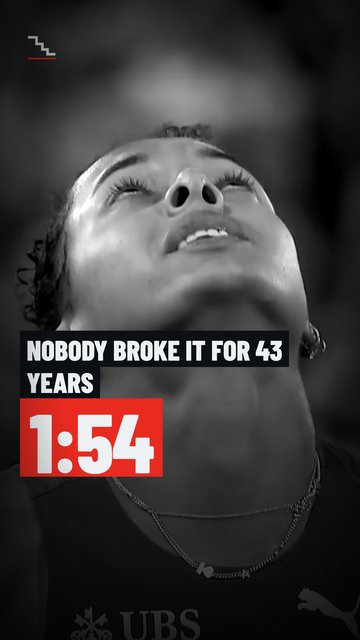
Until this summer. Audrey Werro is 22, from Switzerland. In June in Stockholm, she runs 1:53.98, the first woman under 1:54 in 43 years.
Three weeks later in Paris, 1:53.80, and in August, at home in Zürich, 1:53.70. Only Olizarenko and Kratochvílová have ever run faster, and she doesn't just run fast. She wins.
Outdoors this year, she didn't lose a single 800 metres final. She beat the Olympic champion, Keely Hodgkinson. She beat Femke Bol, the Dutch hurdles star who moved up to the 800.
The gap is now 42 hundredths of a second. At that speed, about three metres. Will someone close it next summer?
Tell us in the comments. For 43 years, the line had no company. Now it does.
Every record has an edge. This one is finally being tested.