0:00Jena, 1996
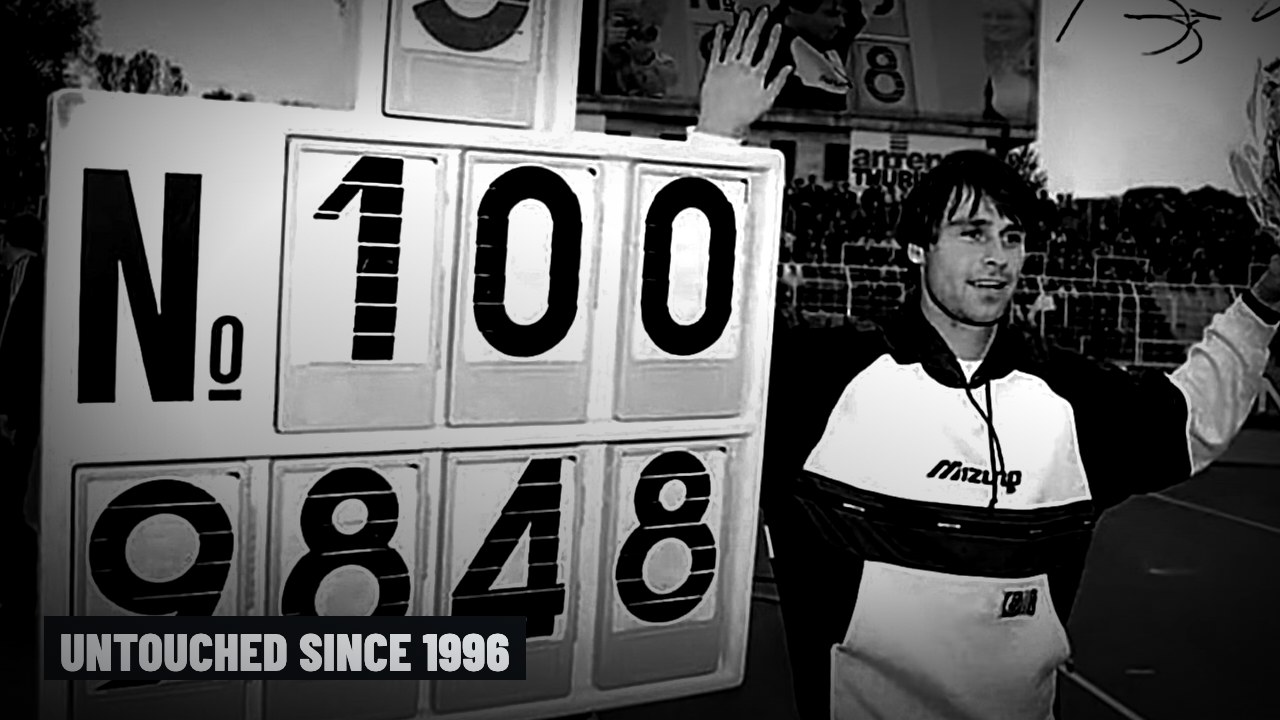
Jena, Germany. May 1996. An evening meet.
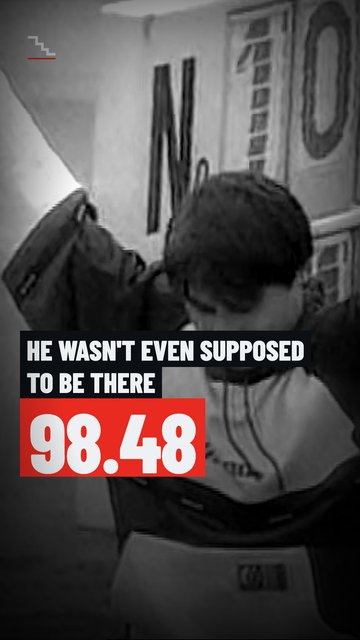
One of the throwers wasn't even supposed to be there. He begged his coach to find him a competition. Then he drove in with his wife, his two small kids, and his javelins in the boot of the car.
Third throw. He goes down, face first, onto the track. He watches the javelin come down, deep in the grass.
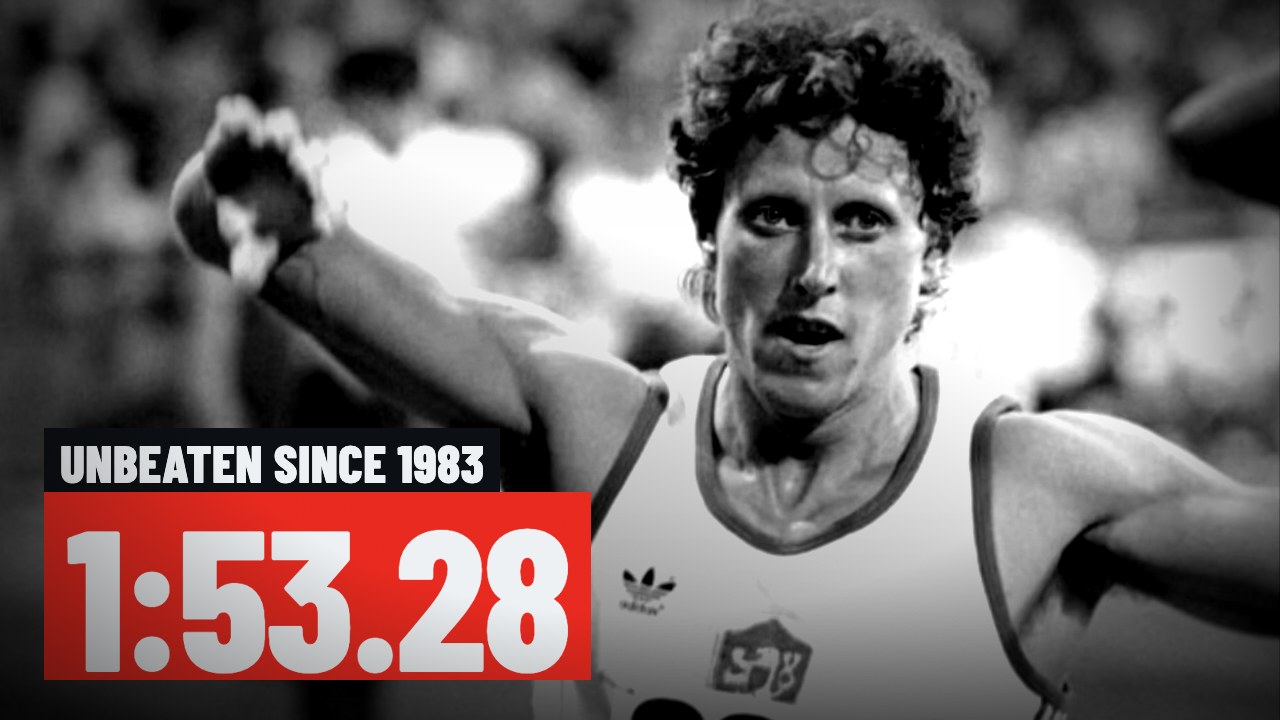
And the whole stadium knows. 98.48 metres. 30 years later, that is still the world record.
But it is not the longest javelin throw in history. 12 years earlier, someone threw it more than six metres further. That throw scared the sport so much, they changed the javelin.
So how did he get this close with the new one? And why can't anyone beat it now?
0:51Too far: 104.80
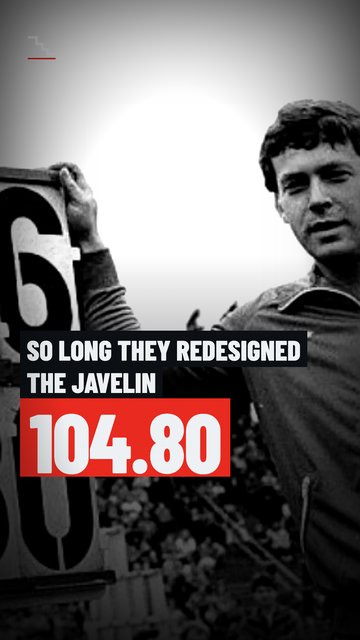
East Berlin, July 1984, Uwe Hohn, aged 22, throws 104.80 metres. Still the only man ever to throw a javelin over 100 metres. He never got to show it at the Olympics.
That summer, East Germany boycotted Los Angeles. The sport already had a problem. The old javelins could glide, and they often landed flat.
When a javelin lands flat, the judges can't easily tell whether the throw counts. And now throws were getting too long for a normal stadium. So in 1986, the javelin was redesigned.
The centre of gravity moved four centimetres towards the tip. The new javelin noses down sooner and lands point first. The throws got shorter overnight, so the record started again from zero.
Hohn's 104.80 was frozen in the history books. People call it the eternal world record.
1:44The new javelin
The first world record with the new javelin was 85.74 metres. A year later, a 20-year-old Czech raised it to 87.66. His name was Jan Železný.
He grew up in Mladá Boleslav, a car-factory town north-east of Prague. Then the engineers fought back. In 1990, a new javelin design appeared with a roughened tail.
It helped the javelin glide again. Records jumped. Železný set one. So did Britain's Steve Backley, then Finland's Seppo Räty threw almost 97 metres.
In August 1991, the rough tails were banned. The records thrown with them were wiped out, including Železný's. And that same month at the World Championships in Tokyo, he didn't even make the final.
2:33The machine
A year later in Barcelona he became Olympic champion. In 1993 he took the world record back, 95.54, then 95.66. He wasn't the biggest or the strongest man in the event.
What he had was speed and timing, a very fast run-up and a whole body that braked and whipped the javelin at exactly the right moment. In his own words, “You have to put everything together. That is the secret of the javelin.”
Over his career, he threw beyond 90 metres more than 50 times. For years, that was more than every other thrower in history put together.
3:12Jena
Which brings us back to Jena. It's a warm evening with the wind blowing behind the throwers. The stadium has one main stand and open sides.
His first throw goes 87.76. His second, 92.88. The third goes 98.48.
Almost three metres past his own world record. He was throwing an old aluminium javelin. And he said later, the throw wasn't even perfect, technically.
3:40After the record
Two months later, he won Olympic Gold again in Atlanta. Four days after that, he tried out as a pitcher for a baseball team, the Atlanta Braves. It didn't go anywhere, but it tells you how famous that arm was.
In Sydney in 2000, he won a third Olympic Gold. A year later, he became world champion for the third time. He retired in 2006, in his home town, where he had started.
4:06Thirty years
Since that night, the record has just waited. Each dot here is the longest javelin throw of that year. Most years the best throw in the world lands somewhere around 90 metres, 8 metres short.
In 2020, in Poland, Germany's Johannes Vetter threw 97.76, 72 centimetres short. A year later, he threw 96. Then his shoulder and elbow started to break down and he hasn't come close since.
Here's the strange part. The man who threw 104.80 later became a coach. In late 2017, he became the coach of a young Indian thrower, Neeraj Chopra, a future Olympic champion.
And in 2024, Chopra's new coach was Jan Železný. The longest throw ever and the world record today. Both men coached the same athlete.
Under Železný, Chopra finally passed 90 metres. 90.23, still more than 8 metres short. This year, the longest throw in the world is 92.62, almost 6 metres short.
5:15Why nobody can beat it
So why can't anyone beat it? Partly, luck. You need the right wind and a stadium that lets it in.
And fewer big meets today are held in open stadiums like this one. Partly, the javelin itself. It was built to stop throws like this, and partly it was him.
A fast, precise thrower on a night he wasn't supposed to be there. Will anyone throw 98.49? Tell us in the comments.
He went down on the track that night. And for 30 years, nobody has thrown that far again. Every record has an edge.
This one is still out of reach.